
You’ve probably heard some version of this tale. Maybe as a kid. Maybe you forgot about it until just now.
But here’s why stone soup keeps coming back, generation after generation—it’s sneaky brilliant in ways most people miss.
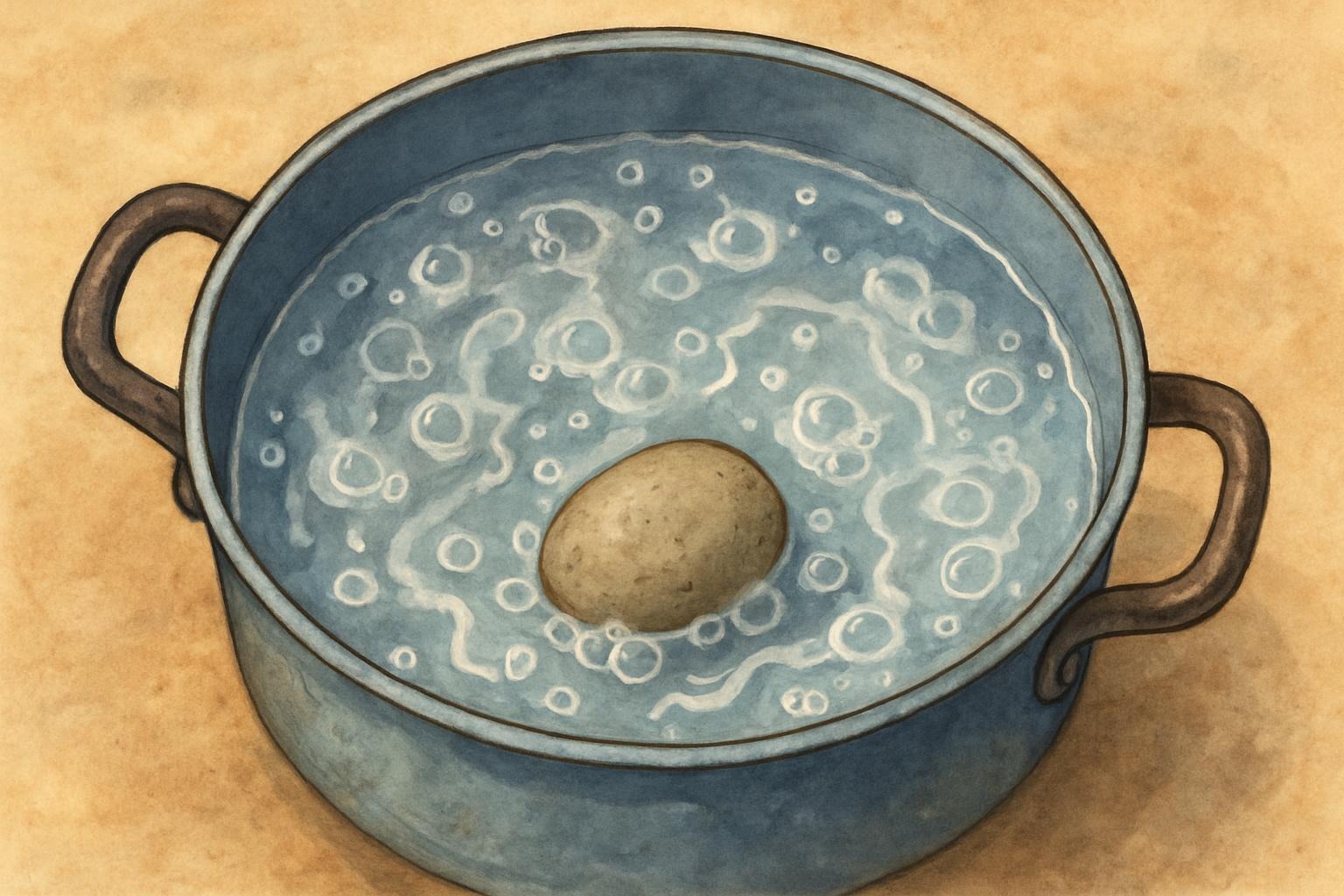
The Classic Version (With My Take)
So there’s this traveler. He’s exhausted, hungry, wandering into a village where nobody wants to share. The villagers are suspicious, hoarding what little they have. Times are tough, right? Everyone’s looking out for themselves.
The traveler asks around for food. Gets rejected at every door.
Does he give up? Nope.
Instead, he sets up a big pot in the village square, fills it with water, and drops in a stone. An actual stone. Then he starts stirring this pot like he’s making the most incredible soup ever created.
Naturally, people get curious. “What are you doing?”
“Making stone soup,” he says. “It’s going to be delicious. Though… you know what would make it even better? Just a few carrots.”
One villager thinks, “Well, I’ve got carrots I can spare.” Tosses them in.
Then someone else wanders over. “What’s happening here?”
“Stone soup! Pretty amazing already, but imagine if we had some potatoes…”
And boom—potatoes appear.
This continues. Onions. Herbs. Maybe some meat if you’re reading the generous version. Each person contributes something small, something they didn’t think mattered much on its own.
By the end? They’ve created this incredible feast that feeds the entire village. All because of a stone and some clever psychology.
What This Story Actually Teaches Us (Beyond “Sharing is Caring”)
Collaboration Beats Isolation Every Single Time
The villagers had everything they needed all along. But they were operating in scarcity mode—everyone protecting their little pile of resources.
I see this constantly in business, in communities, in creative projects. People sitting on their skills, their connections, their knowledge… because they think what they have isn’t enough to matter. Or they’re worried about giving away their “competitive advantage.”
But here’s the truth: collective abundance beats individual hoarding. Always has.
Think about open-source software. Wikipedia. Community gardens. They work because people stop clutching their metaphorical carrots and start throwing them in the pot.
Leadership Isn’t About Having All the Answers
The traveler didn’t show up with a full meal. He showed up with an idea and the confidence to get started with literally nothing but a rock.
Real leadership—the kind that actually changes things—often looks like this. You don’t need the complete solution. You need:
- A compelling vision (even if it’s just “delicious soup”)
- The willingness to start with what you have
- The ability to invite others into the process
I learned this running my first startup. I thought I needed the perfect pitch deck, complete product specs, every detail mapped out. What I actually needed? To start cooking the metaphorical soup and let people see where it could go.
Small Contributions Create Massive Impact
Here’s where the story gets really interesting to me.
Nobody gave everything. Each villager contributed something minor—vegetables they could spare, seasonings gathering dust. Things that felt insignificant alone.
But together? Magic.
This plays out everywhere. Crowdfunding campaigns. Community organizing. Even just helping a friend move apartments—everyone brings a little energy, suddenly the impossible becomes done.
The lesson: stop waiting until you have something huge to contribute. Your small thing matters more than you think.
Sometimes You Need a Catalyst (Even If It’s Just a Stone)
The stone itself? Completely useless for making soup. We all know this.
But it served a purpose—it got things started. It gave people something to gather around, a reason to pause and engage.
In group dynamics, we call this a “conversation starter” or “focal point.” In psychology, it’s related to the concept of commitment and consistency—once people make that first small contribution, they’re invested.
I’ve used versions of this in workshops. Start with something simple, almost silly. Get people participating early. Once they’re in, they stay in.
Perception Shapes Reality
The traveler reframed scarcity into abundance. He didn’t argue with the villagers or shame them for not sharing. He simply created a different narrative—one where everyone could win.
This is honestly one of the most underrated skills in life. The ability to look at the same situation and see possibility instead of limitation.
Your career feels stuck? Maybe it’s not stuck—maybe you’re making “stone soup” by combining skills nobody else has merged before.
Your community lacks resources? Or does it lack a reason for people to pool what they have?
Modern Applications (Because This Isn’t Just a Fairy Tale)
In Business: Think about how startups attract talent before they can afford market-rate salaries. They’re making stone soup—selling the vision, getting early employees to contribute skills in exchange for equity, building something collectively that becomes valuable.
In Creative Work: I’ve watched writers’ groups function exactly like stone soup. Everyone brings their rough drafts (the stones), and through collective feedback and support, actual publishable work emerges.
In Crisis Response: After natural disasters, you often see communities organize this way. Someone has a truck. Someone else has medical training. Another person has space to shelter people. None sufficient alone; together, they save lives.
In Social Movements: Grassroots organizing is literally the stone soup model. One person starts with an idea, others add their time, their platforms, their expertise. Suddenly there’s momentum nobody could have created solo.
The Dark Side Nobody Talks About
But let’s be real for a second.
The stone soup story can also describe manipulation, right? Someone shows up, contributes nothing real, and tricks others into doing the actual work while taking credit.
We’ve all encountered that person. The “idea guy” who never executes. The leader who inspires collaboration but doesn’t pull their weight. The startup founder who convinces everyone else to work for equity while they maintain control.
So here’s the nuance: stone soup works when the catalyst genuinely facilitates something valuable, when everyone benefits fairly, when the person with the stone actually helps cook and serves the soup alongside everyone else.
It fails—becomes exploitative—when someone just drops a rock in a pot and walks away with a full bowl while others starve.
What You Can Actually Do With This
Start something with what you have right now. Not what you wish you had. Not what you’ll have someday.
Your stone might be:
- An idea you keep talking about but haven’t acted on
- A skill you assume everyone has (spoiler: they don’t)
- A problem you’re facing that others probably share
- A space—physical or digital—where people can gather
Then invite contribution. Make it easy. Make it feel like adding to something already valuable rather than building from nothing.
And here’s the crucial part: actually share the soup. Don’t just collect everyone’s carrots and keep them for yourself.
Final Thoughts (Or Whatever)
The stone soup story endures because it captures something true about human nature. We’re capable of incredible generosity and collaboration—but sometimes we need permission to start small, or a reason to believe our contribution matters.
You don’t need perfect conditions to create something meaningful. You need a stone and the audacity to start stirring.
So… what’s your stone? What’s the soup you could make if you just got started?
Think about it.
Or better yet—go find a pot.
Leave a Reply